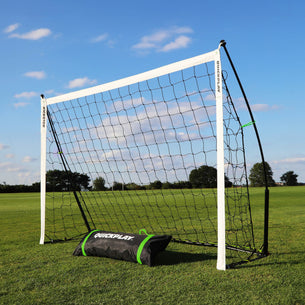
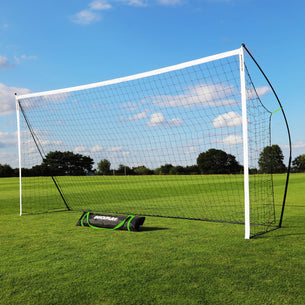
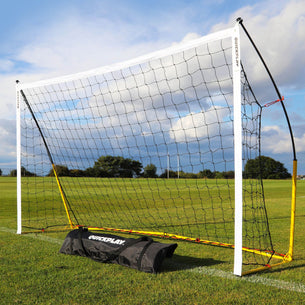
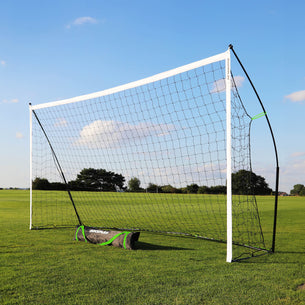
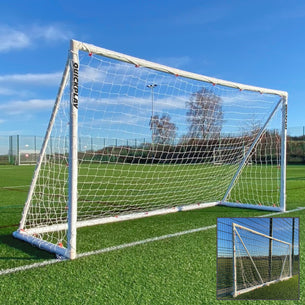
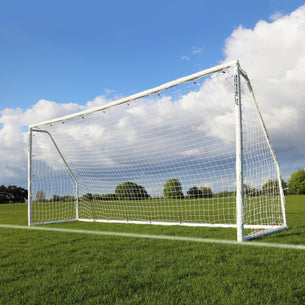
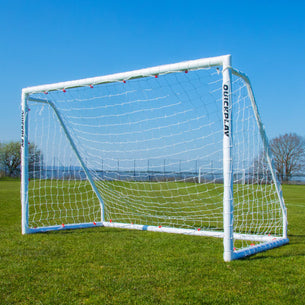
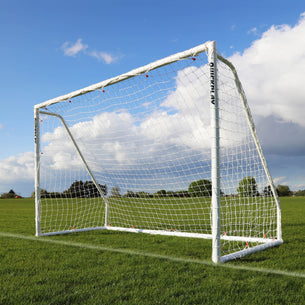
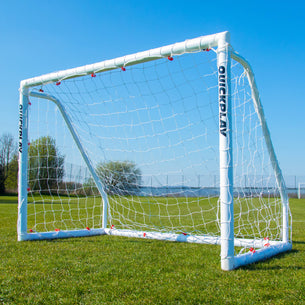
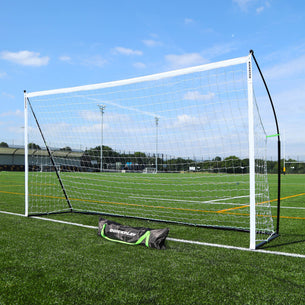
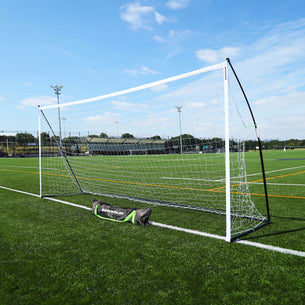
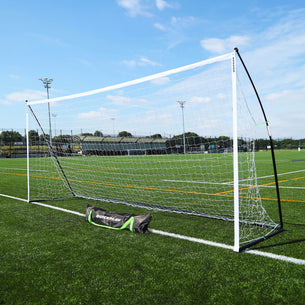
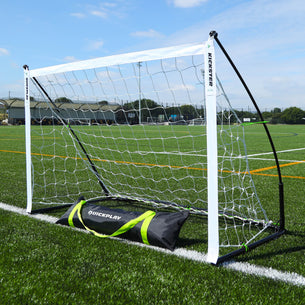
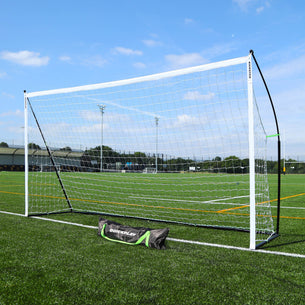
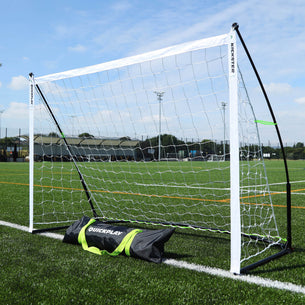
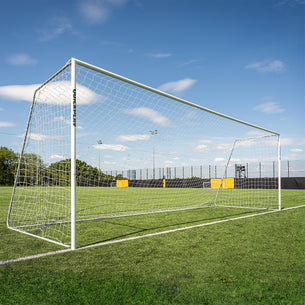
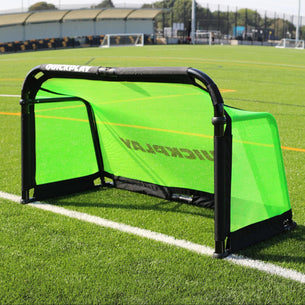
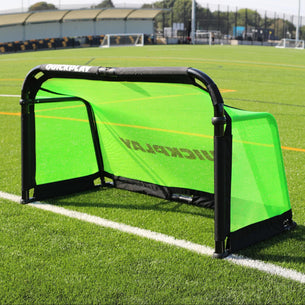
Football goals for the garden, the training pitch and match day, all designed by QUICKPLAY. The range runs from a 3x2.5' mini goal for the lawn through 5x3', 6x4', 8x5', 12x6' and 16x7' up to full-size 24x8' match goals, with futsal 3x2m goals in most ranges. Frames come in three builds: flexi-post and pop-up goals that pack into a bag, uPVC goals that fold flat, and rigid steel or aluminium goals that stay out all season.
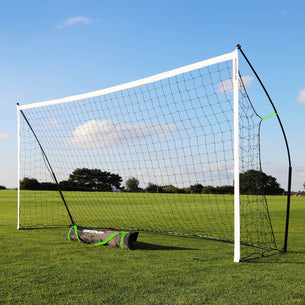
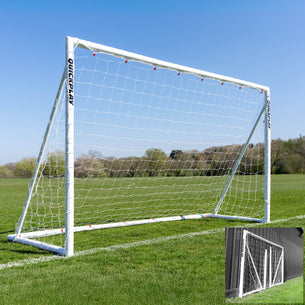
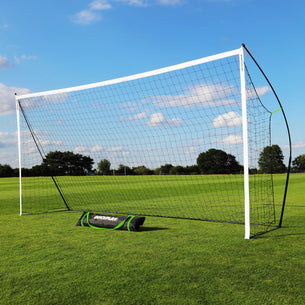
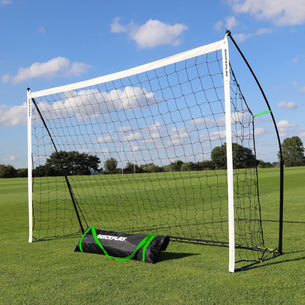
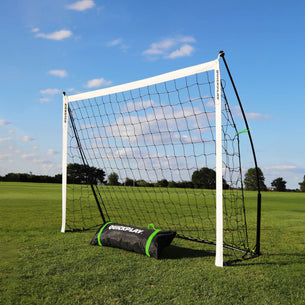
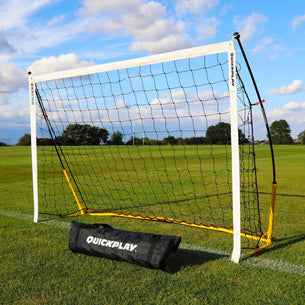
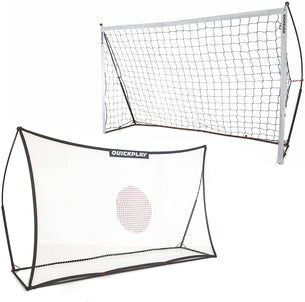
The KICKSTER range is the original flexi-post portable goal: steel base, fibreglass uprights that bend on impact and spring back, and a carry bag, with KICKSTER Elite adding a weighted base for astro and indoor courts and KICKSTER PRO folding open in seconds. Q-FOLD goals are built from all-weather uPVC and fold flat for storage, with Q-FOLD Match stepping up to a higher-grade frame. GS Series goals use a galvanised, powder-coated steel frame in a caged style, and the TEKKERS GS Trainer 3-in-1 turns that frame into a goal, rebounder and passing wall. RHINO aluminium goals open with one pull of a cord. PRO ALU Match goals are folding aluminium match goals from 6x4' to 24x8', joined by PRO ALU Training Frames for double-sided drills.
Every football goal for sale here is designed in-house by QUICKPLAY, established in 2007 and trusted by clubs, schools and parents across the UK. Spare nets, uprights and fixings are stocked across the ranges.
Why buy a QUICKPLAY football goal?
QUICKPLAY has designed football goals since 2007, starting with the patented flexi-post KICKSTER that made a proper goal something you could carry to the park in a bag. Every range since has been designed in-house around one idea: a goal should be quick to set up, stable when the ball hits it, and easy to store when play is over. That is why portable goals use fibreglass uprights that flex and recover, Q-FOLD goals fold flat against a fence or shed wall, and GS Series goals use spring-pin joints that need no tools. Nets are UV-treated, and the Q-FOLD, GS Series and PRO ALU ranges use uPVC, galvanised steel or aluminium frames designed to stay out in UK weather, while KICKSTER goals pack away in their bag between sessions. Spare nets, uprights and fixings are stocked across the ranges, so a goal can be repaired rather than replaced. They are trusted by clubs, schools and parents across the UK.
What types of football goal does QUICKPLAY sell?
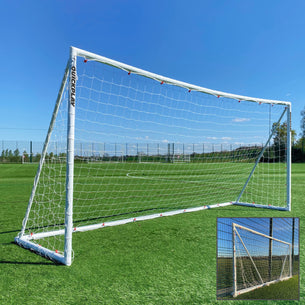
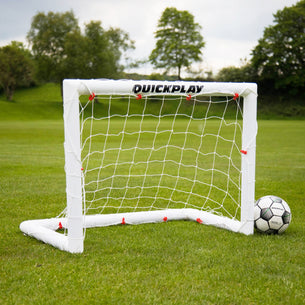
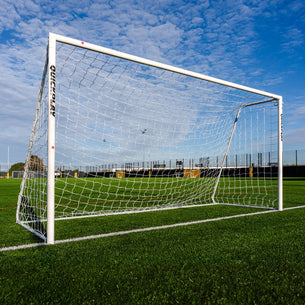
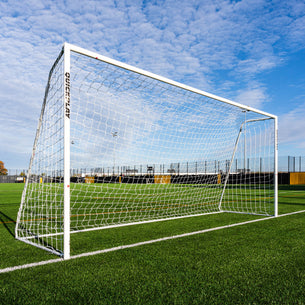
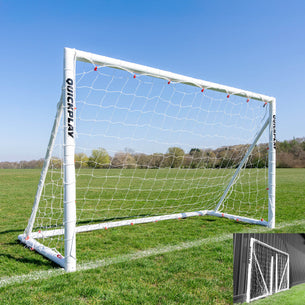
Five types, each suited to a different way of playing. Portable goals (KICKSTER, KICKSTER Elite, KICKSTER PRO) pack into a bag and set up in under two minutes for parks, training and travel. Folding goals (Q-FOLD, Q-FOLD Match, PRO ALU Match) have a rigid frame that folds flat for storage. Garden goals cover the sizes and builds that suit a lawn, from the Q-FOLD Mini to a 12x6'. Match and club goals are aluminium frames in official sizes for training grounds and fixtures, including the 21x7' and 24x8' PRO ALU Match. Pop-up football goals (RHINO) open in a second for shooting stations and small-sided games, and small football goals from 3x2.5' to 5x3' double as targets. On top of these, 2-in-1 goal and rebounder frames give you a goal on one side and a rebound net on the other, and target nets fit over most sizes to add corner targets for finishing practice.
What sizes of football goal does QUICKPLAY sell?
Sizes are listed width by height in feet. The smallest goal posts are the Q-FOLD Mini at 3x2.5', followed by 4x2.5' and 5x3' mini football goals for young children and target practice, then 6x4' and 8x5', the two most popular garden sizes. From there the range moves into team sizes: 12x6' (the standard 7-a-side goal in England), 16x7' (9-a-side), 18.5x6.5', 21x7' (11-a-side for under-14s) and full-size 24x8'. Futsal goals are 3x2m and appear in the KICKSTER, KICKSTER Elite, Q-FOLD Match, GS Series and PRO ALU Match ranges. Dedicated pages group the team sizes: 7v7 goals 12x6', 9v9 goals 16x7', 11v11 goals 21x7' and 24x8' and futsal goals. Not every size is made in every range, so if you have a size in mind, start from the size page and compare the builds that come in it.
What materials are QUICKPLAY football goals made from?
Three frame materials, each with a job to do. Steel and fibreglass: the KICKSTER goals pair a steel base with fibreglass uprights, so the frame is light enough to carry and flexes rather than breaks when a ball hits it. uPVC: Q-FOLD goals use thick all-weather uPVC tubes with locking joints, which is why they can be left outside and fold flat when needed. Steel: GS Series goals use galvanised, powder-coated 42mm steel with aluminium spring pins for a rigid, caged-style frame that stays square under hard shots. Aluminium: PRO ALU Match60 goals use 60mm round aluminium posts and crossbar for match-standard strength with no rust. RHINO pop-up goals use a 50mm aluminium frame. Nets are UV-treated and step up in thickness from 2mm on garden goals to 3mm on match goals; most are HDPE, with polyester or PU nets on some models.
Which football goal size is right for my child's age group?
In England the FA sets goal sizes by format: 12x6' for 7-a-side (under-10 and under-11), 16x7' for 9-a-side (under-12 and under-13), 21x7' for 11-a-side at under-14, and 24x8' from under-15 to adult. 5-a-side football at under-8 and under-9 also uses 12x6' goals, 3-a-side at under-7 uses 4x2.5' goals, and futsal uses 3x2m. For the garden the question is space rather than rules: a 6x4' or 8x5' suits most lawns, while a 12x6' lets older children practise at the size they play on at the weekend. Our kids and junior football goals page groups the sizes that work for younger players, and the 7v7, 9v9 and 11v11 pages carry the team sizes.